




















Archive for August 2011

SharePoint and Disaster Recovery Options

August 23rd, 2011
Posted by: admin

AIS Network Blog SharePoint 2010 Disaster Recovery

The SharePoint 2010 Disaster Recovery Guide.

By Terry Engelstad
MCP, MCSE, CCNA, MCDBA, MCTS, MCITP
AIS Network Operations Manager

The complexity and diversity of the Microsoft SharePoint platform also applies to its disaster recovery options.  When it comes to protecting your SharePoint farm from the effects of a catastrophic event, there are numerous tools and best practices.  But which is the best fit for you?

I recently completed reading and studying the SharePoint 2010 Disaster Recovery Guide by John L. Ferringer and Sean P. McDonough.  It’s a worthwhile read, if you have the opportunity and particularly if you are trying to determine whether your current procedure for backing up SharePoint environments provides adequate and proper recovery capabilities.

The book explains that there are three kinds of recoveries:

-          Content

-          Site Collection

-          Full Farm

If you need to do Content recovery, then the Content Database needs to be backed up. If you need to recover a Site Collection, then the Site Collection needs to be backed up. Content is backed up as part of a Site Collection, but a Site Collection is not backed up as part of Content. If you need to recover a full farm, then you need to do a Full Farm backup. Merely backing up the individual SQL Server databases does not capture enough information to recover a full farm. There are additional components that get installed on the server; these are not in a SQL Server database and therefore will not be available for a recovery.

This means that if your current procedure is to back up the SQL Server databases, then that method will not work for Full Farm recovery of SP 2010 Foundation or Server. According to Microsoft, this is an un-supported practice, which means you may get lucky and it might work, but then again, maybe not.

The only fully supported method for a full farm recovery is to do SharePoint Full Farm Backups. SharePoint Full Farm Backups are executed via:

1) SharePoint Central GUI,

2) PowerShell commands, or

3) stsadm command line.

Execution via PowerShell or stsadm can be scripted as batch jobs and scheduled. A full farm backup ends up including the SQL Server databases, but it also picks up the IIS configuration, the Hive, GAC components, and Customized Code – everything required for Full Farm Recovery.

In some circumstances, there may be a difference in the amount of space and time used to create a Full Farm Backup. FFB creates an un-compressed, directory structure, which would subsequently be backed up to storage for 14-day (or otherwise) retention. The “un-compressed” part will not be affected by those implementations using SQL Server Web Edition, since Web Edition doesn’t compress backups. For those implementations using SQL Standard or SQL Enterprise, this would result in additional disk space being consumed, because what was once compressed will no longer be compressed.

How are you approaching SharePoint 2010 disaster recovery?  I encourage your comments.

TAGS:

CATEGORIES:

HostingCon 2011: Building a Meaningful Content Marketing Program

August 20th, 2011
Posted by: admin

Laurie Head, Carrie Jones

AISN's Laurie Head and Carrie Jones of BaileyGardiner present "Content Is King" at HostingCon 2011.

By Laurie Head
AIS Network Vice President, Marketing Communications

The hosting industry’s premiere conference, which was held last week (August 8-10) in San Diego, was the most successful in the conference’s history.  According to HostingCon 2011 organizers, total show attendance surpassed by 13 percent the record mark set in 2010.  More than 1,800 professionals in the hosted services industry gathered in San Diego to learn, network, and talk about the cloud — quite a lot, in fact.

AISN CEO Jay Atkinson and I attended HostingCon for the very first time.  While there, our company was honored to present a session on content marketing.  During that session, Carrie Jones of BaileyGardiner, one of San Diego’s hottest marketing agencies, joined me for an hour’s delve into why it’s important to build a meaningful content marketing program.  We explored why online content is core to what we do as marketers; best practices to develop, optimize and share it;  and how we can achieve quality content without breaking the bank.  Our slide deck and handouts can be viewed in AISN’s Knowledge Center.  I’d love to know your thoughts after you look through it.

Were you at HostingCon too?  What were your impressions of the conference?  Share your comments below or tweet them: @AIS_Network.

TAGS:

CATEGORIES:

Examining SharePoint Data Integration

August 18th, 2011
Posted by: admin

By Terry Engelstad
MCP, MCSE, CCNA, MCDBA, MCTS, MCITP
AIS Network Operations Manager

This week, we were contacted by a vendor for a new software product that claims to connect almost any on-premise data source (e.g., databases, ERP/CRM) to Microsoft SharePoint 2010 and Microsoft Office 365.

I’m not sure of the value of this to a SharePoint hosting provider per se.  I’ll need to digest some different scenarios in order to understand how AISN would use this, but it gave me the idea for this blog.  Here’s a little background about data integration with Microsoft Office 365 (SharePoint), and probably, why this type of product evolved.

SharePoint MOSS 2007 introduced a new service called Business Connectivity Service (BCS). It allowed users to access external data in a variety of forms (databases, spreadsheets, files, etc.) from inside SharePoint. SharePoint 2010 renamed it “Business Data Connectivity” (BDC) and embellished the feature-set, including the ability to Search the external data. BCS and BDC do not copy data into SharePoint. They set up virtual connections to the data and allow other components within SharePoint to see and touch the data. At no point is data copied into SharePoint. Connections to external data are not persistent. This means they will exist for as long as necessary, then dissolve, then re-connect as necessary. This is not too efficient for large volumes of data.

When a connection is set up to an external source, there is a requirement to provide credentials in order to access the external data. SharePoint allows only three ways to provide credentials:

1) the Windows account of the logged on user running the SharePoint BCS/BDC process,

2) the operating system account of the service running the BCS/BDC process, or

3) a customized set of credentials.

MOSS only allows types 1 or 2.  On the other hand, SharePoint Foundation 2010 only allows types 1 or 2, and SharePoint Server 2010 allows all three types but needs to retain credentials for type 3 in a service called Secure Store. This service is available only in SharePoint Server – not MOSS and not Foundation.

Office 365 is built on the foundation of SharePoint Foundation (and so is our Shared SharePoint environment). Microsoft has stated that Office 365 does not allow accessing external data through BDC. I haven’t seen a document stating the reasons for this, but I can draw conclusions from the statements above.

First, since data is not actually copied into Office 365 SharePoint, there is no consumption of space, only consumption of network bandwidth and CPU. Since the pricing model for Office 365 is built around space consumption, Microsoft would not make any money if clients used, for example, only external data. Picture a SharePoint environment where there is no data stored locally, only accessed through BCS/BDC. Not too profitable.

Second, Office 365 does not allow access to external data because of credentials. In Office 365, Windows accounts and Operating System service accounts will have no meaning outside of Office 365. Therefore, a user could not authenticate with those credentials to any data source outside of Office 365. And again, since Office365 does not use the Secure Store feature found in Server, special/unique credentials cannot be stored.

So, long story short, there is still a need to get data into Office 365. The method proposed by this new software is to copy data from external data sources into SharePoint Lists. This is an OK way of getting data into SharePoint. I’m just not sure how many people would want to take advantage of it. We’ve had only one client in our Shared environment ask about BDC capabilities, and my research/response to that client has led to the above discovery. We do have one MOSS client using BCS to access several spreadsheets which they periodically refresh on their dedicated server.  None of our dedicated SharePoint 2010 clients are currently using BDC.

I’d be interested in any comments that readers of this blog may have.  What are your thoughts?

TAGS:

CATEGORIES:

SharePoint Saturday in DC a Big Success

August 16th, 2011
Posted by: admin

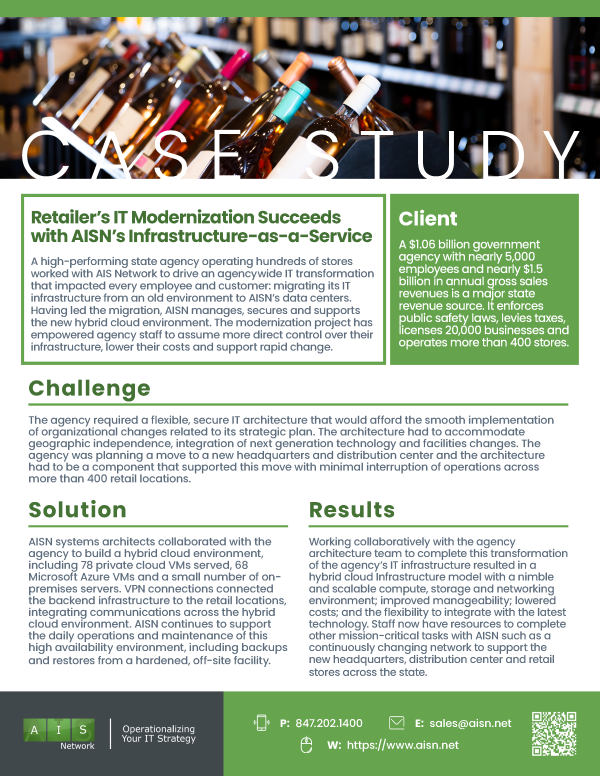
AIS Network booth, SharePoint Saturday

AISN CEO Jay Atkinson in the AISN booth at SharePoint Saturday.

By Laurie Head
AIS Network Vice President, Marketing Communications

Last week’s SharePoint Saturday The Conference in DC (August 11-13) was a terrific success.  This community-organized event attracted about 2,000 registered attendees and 60 sponsors. Over 190 speakers presented 250 sessions.  150 volunteers coordinated it.  Kudos to Dux Raymond Sy, managing partner at Innovative-e, and his team of volunteers who made it all happen.

AISN used this opportunity to:

  • reconnect with old colleagues and welcome new colleagues;
  • present a session (led by AISN Chair Kurt Baumann) for those who are choosing between on-premise hosting and outsourced hosting;
  • communicate the value of outsourced SharePoint hosting through our exhibit in the Exhibitor Hall; and
  • release our    white paper, “To Cloud or Not to Cloud: SharePoint 2010 Hosting Options…and Which One Is Right for You.”

If you didn’t make it to the event, we encourage you to participate next time.  For less than a $40 registration fee, it’s a great value to the SharePoint Community.  Check the SharePoint groups on LinkedIn for feedback.  Also, Dux’s blog may be found on his site.

What did you think of SharePoint Saturday?  We would love to hear from you.

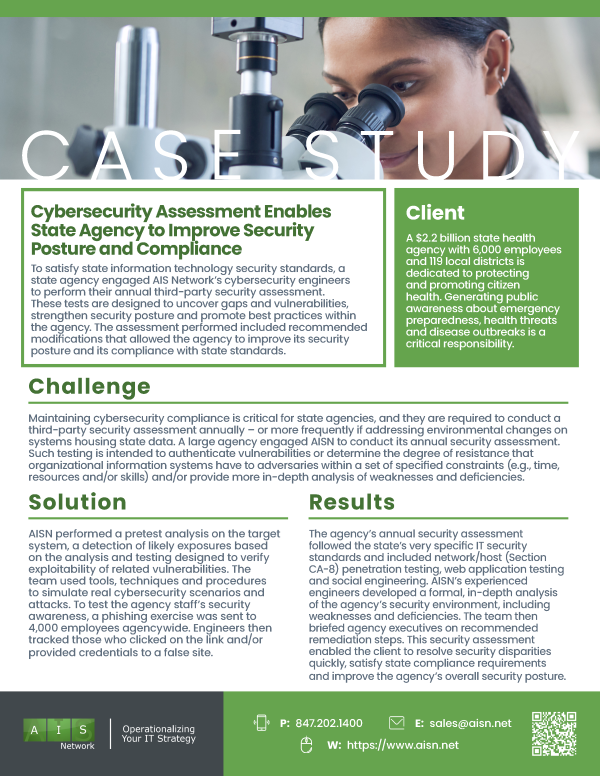
Jay Atkinson, Mike Herrity at SharePoint Saturday DC

Jay Atkinson and Mike Herrity get their ducks in a row.

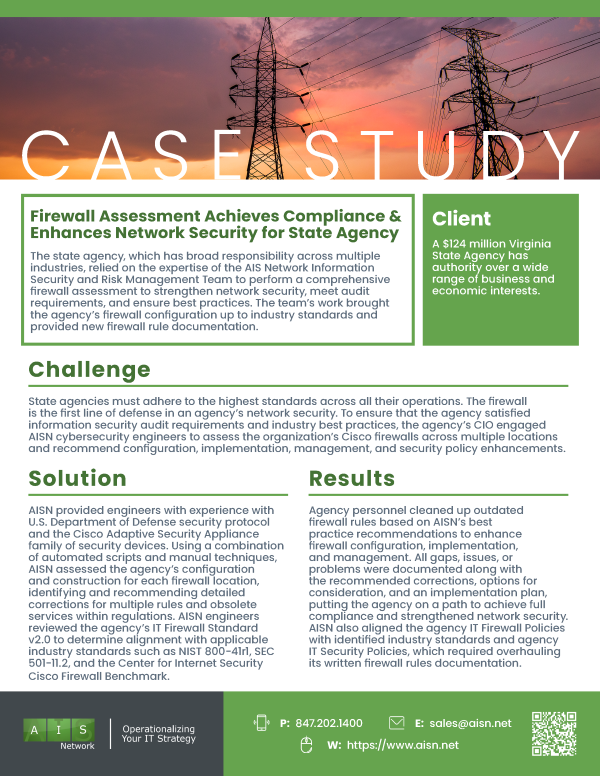
SharePoint Saturday DC

SharePoint Saturday crowds throng the booths.

TAGS:

CATEGORIES:

SharePoint Hosting White Paper Rolling Out on Thursday

August 10th, 2011
Posted by: Michael Emrich

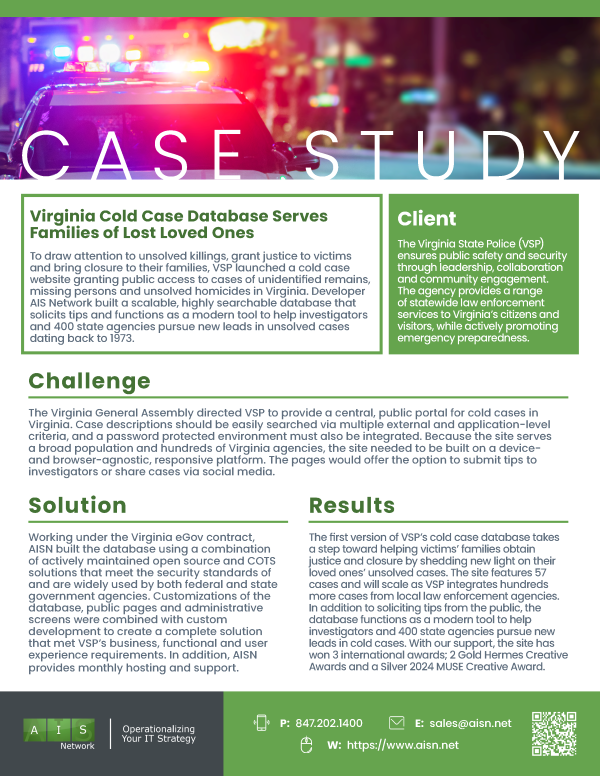
SharePoint White Paper

AIS Network has released a new white paper, "To Cloud or Not to Cloud: SharePoint 2010 Hosting Options...and Which One Is Right for You."

By Michael Emrich – Associate, Marketing & Sales

This Thursday will be a big day for AIS Network. Not only will it be the first day of SharePoint Saturday in Northern Virginia, an event we will be attending for the first time, but we will also be rolling out our first-ever white paper. Entitled, “To Cloud or Not to Cloud: SharePoint 2010 Hosting Options…and Which One is Right for You,” the white paper will serve as both a guide to SharePoint and its hosting and an in-depth analysis of the rapidly-growing cloud-based hosting platform for SharePoint.

The paper will serve as a guide to the many hosting options that SharePoint users have available to them. Some of the questions addressed in the paper include:

  • What are your SharePoint hosting options?
  • What are the pros and cons of each option?
  • In what situations would each be preferable?
  • What does each method need from you in order to work?

Selecting a hosting method needs to be a very educated decision, and this white paper is your text book.

The cloud-based hosting method will be discussed in great length, chronicling the explosive growth of hosting SharePoint in the cloud and what kind of options you’ll have available to you. The whole concept of cloud computing is still a relatively new one, so this white paper will hopefully educate you and clear up any misconceptions that you might have about the cloud.

So, if you’re going to be at SharePoint Saturday in Northern Virginia, stop by Booth #419 and pick up a copy. Or, if you’re more interested in an electronic copy, keep an eye out for the white paper’s pdf release on the company Web site.

TAGS:

CATEGORIES:

Internet Pioneers Series: Episode 2, Kurt Baumann on the First Japanese ISP

August 5th, 2011
Posted by: Donna Hemmert

Welcome to the second episode of our Internet Pioneers Series. We believe there are many untold stories of the history of the Internet and we want to help get them out there.

This micro-episode features Kurt Baumann, serial entrepreneur and chairman of AIS Network.  He has founded many successful Internet companies.  In this episode, Kurt talks about starting the first commercial ISP in Japan.

And if you are, or know, an Internet Pioneer, please comment here or email us at info@aisn.net.


Kurt Baumann and the First Japanese ISP

TAGS:

CATEGORIES:

AIS Network to Present “Content Is King” at HostingCon 2011

August 3rd, 2011
Posted by: admin

By Laurie Head
AIS Network Vice President, Marketing Communications

If you have to ask what content marketing is, it’s more than likely that you’re not doing it – or at least, you may not be doing it well.  And, if you are not using compelling content to connect with customers, potential customers and your industry at large, well, then your company may not be realizing its full potential as it competes in the 21st century market.

The rules of marketing have changed – due in large part to social media and the ability to share content.

It’s no longer all about boisterously proclaiming your product’s superiority in so many different ways – or about interrupting your customers repeatedly with advertising or other messages.

Rather, you should recognize that what customers really crave is valuable content that will solve their problems and demonstrate how your product, or service, lives in the world.

Wednesday, August 10 at 3p.m.

Let’s face it.  With the exception of a handful of companies, the hosting sector has never particularly excelled at marketing.

As an industry, we don’t articulate clearly the value proposition of outsourced hosting.  It doesn’t have to be that way.  Now is the time for us, as an industry, to start making the connection between how the latest approaches to creating good content and utilizing social media dovetail to help us in telling our individual and collective stories more clearly.

Next week, in our “Content Is King” session at HostingCon 2011 (the premiere conference for the hosting industry), Carrie Jones of San Diego’s prestigious BaileyGardiner marketing agency and I will explain how getting customers to engage with your company’s expanding body of content is one of the most effective ways in which you can:

  • enhance your company’s credibility and visibility;
  • raise the perception that you are an expert in your industry; and
  • build ongoing loyalty/advocacy for your brand.

Even marketing/communications teams that are on a budget can become effective at content marketing, and we’ll give you some ideas and examples to run with.

I encourage you to learn more.  Join Carrie and me for our “Content Is King” session at HostingCon 2011:  Wednesday, August 10, at 3 p.m. in the San Diego Convention Center.

TAGS:

CATEGORIES: